| |
| |
|
|
| |
Dental Implants |
|
| |
|
|
| |
|
|
| |
These are the most modern
method of replacing missing teeth. Research shows that 85 percent of people who wear full or partial dentures
experience some related discomfort and difficulty. Dental implants can eliminate those problems, restore
self-confidence and improve the
quality of life. From a
single missing tooth to an entire set of teeth, dental
implants can
provide a permanent alternative to problem
dentures,
and help prevent the premature loss of remaining teeth . Dental implants can last a lifetime and are an
excellent
investment in oral health.
|
|
| |
|
|
| |
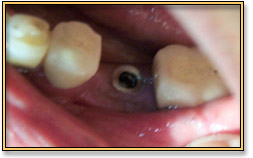
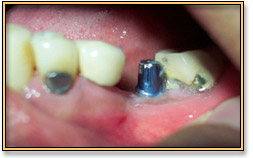
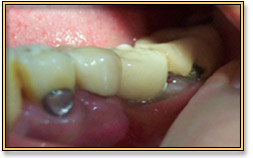
Single tooth Implant
|
|
| |
|
|
| |
|
|
| |
They are made of biocompatible materials that
become directly attached to your jawbone. Once anchored in
place, your implants can be used to replace a missing tooth,
support an entire set of teeth or retain an over denture.
The result is a natural type of tooth replacement that
can
restore the biting and chewing ability you once enjoyed,
improve your appearance and renew your self-confidence. |
|
| |
|
|
| |
|
|
| |
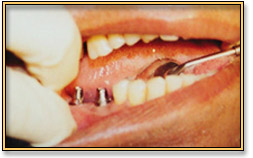
Tooth Implants for bridge work |
|
| |
|
|
| |
Placement of dental implants is a minor
surgical procedure whereby Implants are placed beneath the
gums . They are left for a period varying from 3 months to
6
months so that the bone attaches to them and permanently
anchors them within your jaw. A second, simple surgery
is
performed to uncover them and attach a post to support your
replacement teeth. The
decision to replace the teeth in 3 or
6 months depends on a number of clinical factors, such as
the amount of available bone and location of the implants.
In the meantime,
we adjust your full denture or partial
prosthesis for temporary use. |
|
| |
|
|
|
|
|